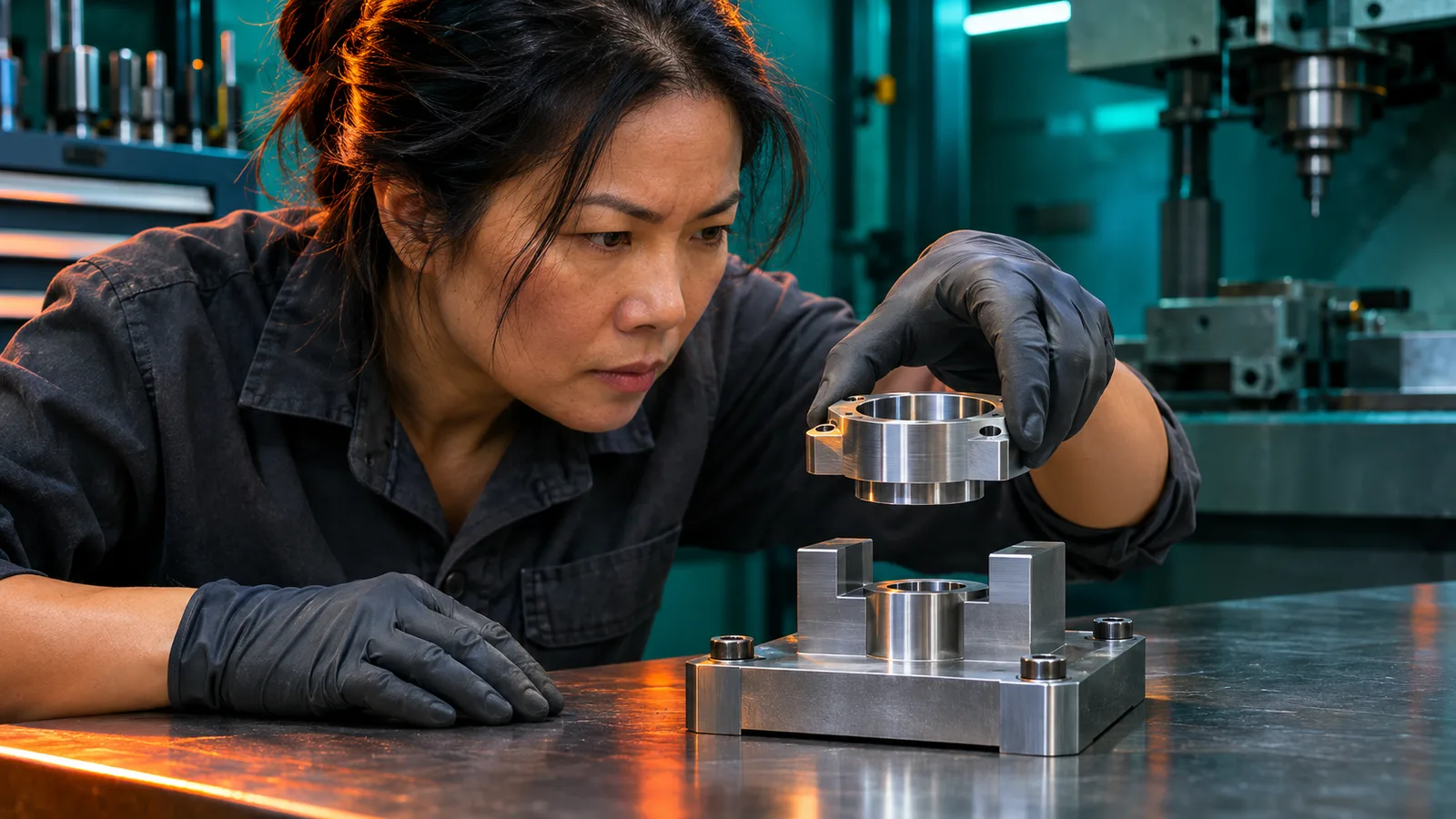
In an AI robot arm test by researchers at Tsinghua University and Nvidia, the arm passed 75 of 85 physical trials. The study, listed by Hugging Face on 26 November 2026, showed how their SOLVE method handled unfamiliar tasks on the same arm. It built a stable stack in every attempt, yet managed a tight peg insertion in just two of five. If you are weighing up automation for a small workshop, the score for your particular job matters far more than the average.
What happened
The team set out to see whether one system could handle a range of physical jobs without collecting practice footage or writing separate instructions in code for each job. Their arXiv research paper describes SOLVE as a way to pair an AI model that reads instructions and looks at images with software that works out how a robot arm should move. Hugging Face featured the paper in its 26 November research roundup.
Think of moving an object from a bench into a tray. The model can specify where the gripper needs to be to pick it up, then where it needs to be to set it down. The movement software works out what happens between those points. The model then checks the scene after the move and decides what to do next. The paper calls those target positions and orientations keyposes.
The physical setup used a single UR12e arm with a gripper, a camera on its wrist and a fixed camera looking in from outside. The researchers gave each task as an ordinary-language instruction. A person judged the result against a set criterion, such as whether the part was fully seated, and confirmed it against the final camera images.
Some trials involved watching a person build a structure and then rebuilding it. Those examples took place during the trial. There were no pre-collected demonstrations, saved guides or task-specific code for the physical tests. Our coverage of Nvidia's GR00T 2 robot model describes a separate line of research on teaching new jobs from demonstrations.
Key details
The full paper breaks down the physical trials by task. The sample counts are small, so use the differences to see what was difficult in this setup.
| Physical task | Successful trials | What to look for in a similar demonstration |
|---|---|---|
| Building a four-level stack | 5 of 5 | Check that the stack stays stable after the gripper lets go. |
| Inserting pegs into holes | 2 of 5 | Check that the part is fully seated every time it is released. |
| Folding a shirt | 6 of 10 | Try a shirt that starts bunched up or at an awkward angle. |
| Playing Gomoku against a person | 10 of 10 across two tasks | Keep game results separate from scores for the physical work you want done. |
Across the whole set, SOLVE completed each of the 16 tasks at least once. The paper reports an average of 6.6 minutes per trial based on the runs with complete logs. That average combines different jobs, so a business would need to time its own task from the moment a part arrives to the moment somebody can use the result.
Why it matters
The peg test gives a concrete example of where a promising motion can fall short. The authors describe the arm releasing its work before both pegs had seated, followed by a protective stop. In shirt folding, fabric slid along with the gripper. The authors say some jobs require force control or continuous feedback that the method's target positions cannot provide.
That distinction matters if you are comparing two jobs that both look like picking up and putting down a part. Dropping a boxed item into a roomy bin has a clear finish. Seating a plug or lining up a component with a hole involves contact, and the part can look close enough from above while still being out of place. If that second job is your bottleneck, ask the supplier to show you how it checks the finished fit.
Cost figures need the same scrutiny. The paper's efficiency comparison concerns the cost of calling the AI model during simulated tasks. For a workshop, the budget question covers the proposed arm, fixtures that hold your parts in place, installation, staff time and support. Ask for those items in the quote and keep the figures for each separate from the cost of running the model.
The study is evidence from one physical arm on a selected set of tasks. It is a different kind of evidence from the deployments and agreements described in our coverage of Digit humanoid robots in warehouses. When a supplier presents either kind of evidence, ask them to identify the site, the task, how many times it was run and what staff did when it failed.
A missed attempt also has a different cost depending on where the arm sits in the process. If someone can set a rejected part aside and the next order keeps moving, write that into the comparison. If a jam means the whole bench waits until a trained operator comes back, ask how that wait will be captured. Both cases could produce the same count of good parts on a demo sheet while leaving your shift in a very different position.
What this means for businesses
If you run a small fabrication shop or packing operation, start with a job your team can describe from start to finish. Pick a task with an outcome you can inspect, such as placing the right finished part in a tray without marking it. Your test brief should also say what still needs to happen before the next worker or machine can take over.
- Bring the stock you handle on a normal day. Include the sizes that turn up together, worn cartons and parts that arrive in the wrong orientation. Ask for a second run with those items shuffled after the supplier has set up.
- Agree what counts as a pass. For a part in a fixture, have the operator check that it sits flush and faces the right way. Count pieces that need touching up, even if the arm finished its movement.
- Count the time staff spend helping. Time loading, clearing a mispick and starting work again alongside the routine movement. Ask the supplier to describe what a staff member sees when the equipment stops.
- Check the setup with the people who work there. Include the person who supplies parts, the person who clears a stoppage and anyone who cleans the work area. Safe Work Australia has a model code on managing risks from workplace machinery. Ask your local regulator how it applies at your site.
If you handle imported foods, test the forms you receive. The Truly Ceylon catalogue lists moringa powder in pouches, jars, sachets and bulk bags. A successful run picking jars tells you how the arm handles jars. Include a separate run for flexible packs if they also go through your line.
Bring the operator's run sheet to the conversation. Give failed fits, rejected stock and equipment stoppages their own columns, with a place to record who had to step in. If you mix them together as downtime, you lose the detail you need to decide whether to change the way parts arrive, allow extra inspection time or ask for a different setup. Keep the current manual process on the sheet so you have something to compare with the trial.
Use the same acceptance test for each quote. Our guide to writing a brief suppliers can quote against gives you a way to set the scope in writing. For an arm that is meant to pack orders, include what should happen to the stock record when an item is picked, dropped or put aside for someone to check.
If that stock handover is the part you need to sort out first, our digital transformation service starts with the existing process and plans changes in stages. You can request a free first consultation and agree a written quote before work starts.
Frequently asked questions
Is SOLVE a robot you can buy?
SOLVE is the method used to control the arm in the study. The paper gives no commercial price or delivery schedule for a packaged system.
What does 88% success mean in the AI robot arm test?
It is the share of the physical trials the arm passed across the entire task set. For a specific job, look at how that task scored and how the researchers judged it.
Did the arm practise the physical tasks before the trials?
The team used no pre-collected demonstrations or task-specific code for the physical trials. In some trials, watching a person build an object was itself part of the task.
What should a supplier show if my job involves fitting parts?
Ask for repeated runs on your own parts and have someone check every finished fit. Record any part that needs a push, a second attempt or a manual reset.
Can I use the 6.6-minute average to estimate output?
Use it to understand the study's logged trials, which covered several kinds of work. For your own output estimate, time a complete run on your job, including any staff intervention.
Key takeaways
- SOLVE passed 75 of 85 physical trials using one arm across 16 tasks.
- The arm passed two of five peg insertion trials. Look for the result closest to your job.
- Agree how to count rejects, stoppages and staff time before you compare supplier quotes.